28 September 2026 · 6 min read
GPT-6 Sol and Luna: What GCC Ops Buyers Should Know
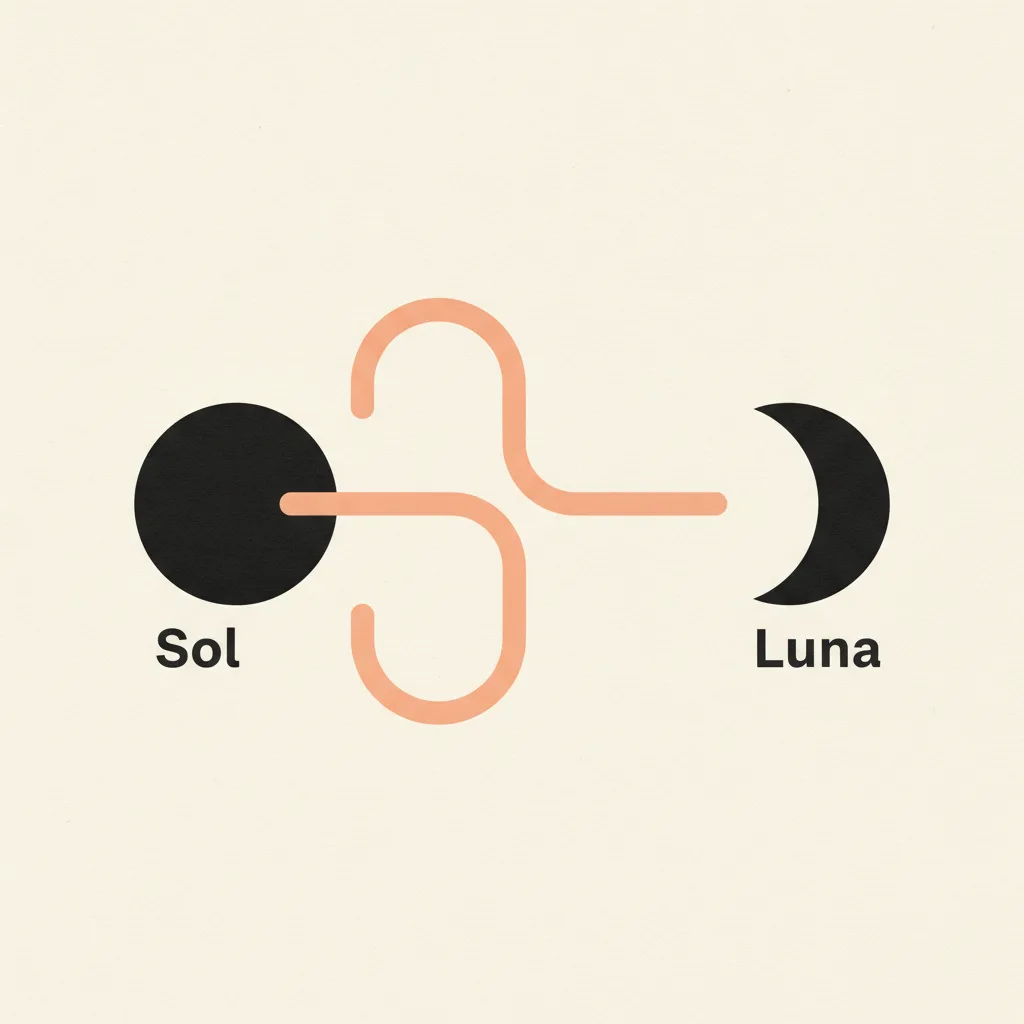
OpenAI split GPT-6 into Sol and Luna — capability vs. cost. GCC operators running ERP or workflow automation face a real architectural choice, not a billing preference.
Key takeaways
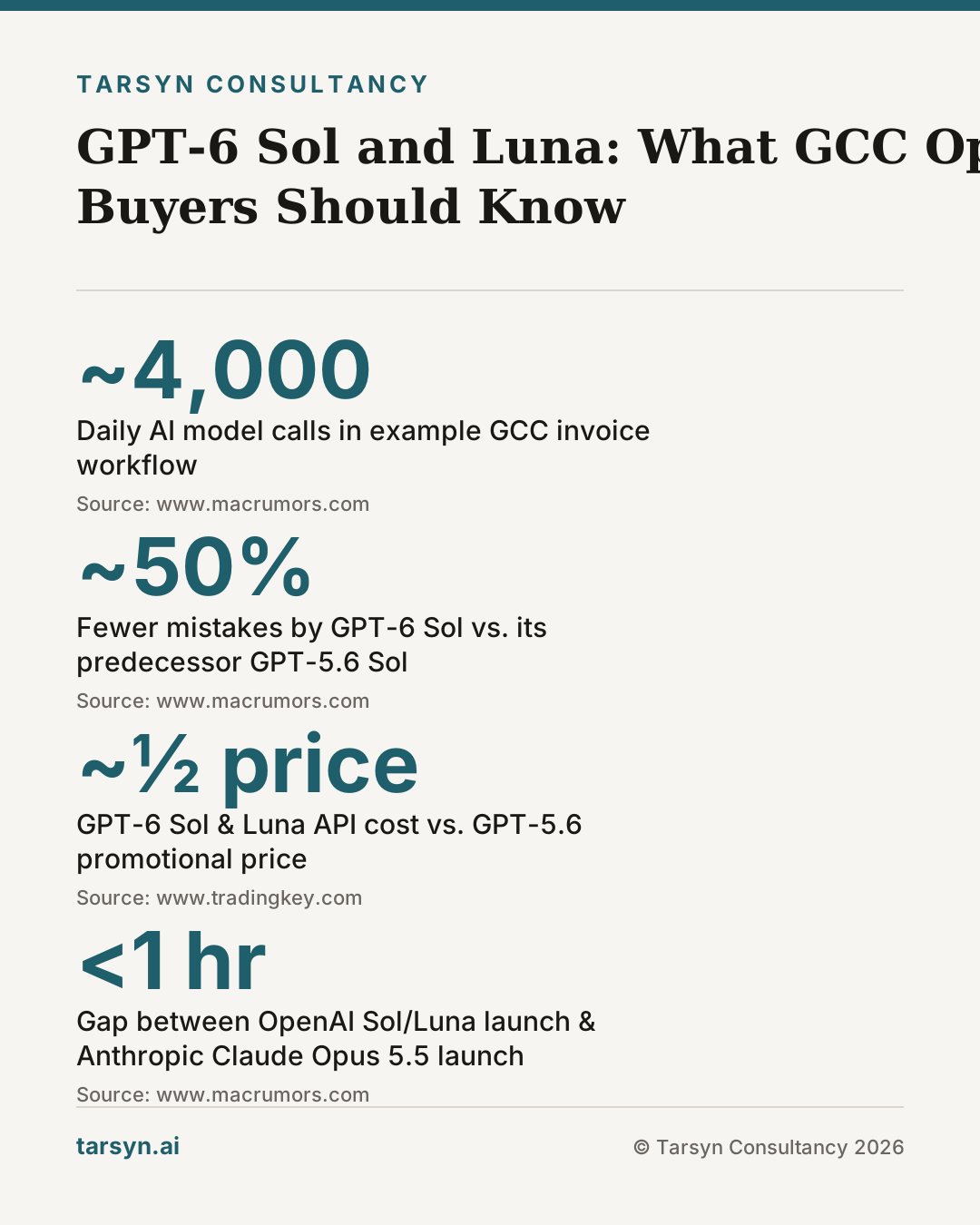
- GPT-6 Sol makes roughly half as many errors as GPT-5.6 Sol — relevant when a mistake in a procurement workflow costs more than a month of token bills.
- GPT-6 Luna is priced at half GPT-5.6's promotional API rate, making it viable for high-volume, low-stakes tasks like notification routing or report summarisation.
- The Sol/Luna split forces a process-level decision: map which steps in your ERP chain are accuracy-critical before touching model selection.
- Defaulting to Luna to save cost in a complex approval or compliance workflow is the most predictable way to import expensive errors into your operations stack.
A procurement manager in Jebel Ali runs an automated three-way match on every inbound invoice. The workflow calls an AI model for document parsing, exception flagging, and approval routing — roughly 4,000 calls a day. When OpenAI announced GPT-6 Sol and Luna on 22 September 2026, his instinct was immediate: switch to the cheaper one, save on tokens. That instinct will cost him more than tokens.
What OpenAI actually shipped: Sol, Luna, and the tradeoff
GPT-6 Astra — launched earlier — is OpenAI's frontier model. Sol and Luna sit below it, but both were developed using methods derived from Astra, which means the quality improvements in professional work, factuality, coding, and alignment carry down the stack. [1]
The practical split is this:
- GPT-6 Sol targets complex workflows — long-duration coding, business process automation, computer use. It makes roughly half as many mistakes as its predecessor GPT-5.6 Sol, and achieves competitive benchmark scores against Anthropic's Claude on several knowledge and coding tasks. [1]
- GPT-6 Luna is the lightweight tier — fast responses, high-volume throughput, budget-friendly pricing. Positioned for tasks where speed and call-volume economics matter more than deep reasoning. [2]
On pricing: OpenAI cut API rates for both models to approximately half of GPT-5.6's promotional price. [2] That number will move purchasing conversations. It should not be the primary input to an architecture conversation.
Why a two-model split is a harder problem than a single upgrade
When a vendor upgrades a single model, the decision is simple: test and migrate. When a vendor releases two models at different capability and cost tiers, every team now owns an allocation problem.
A single frontier upgrade means you evaluate one thing. A two-tier system means you must answer: which steps in my process chain belong in which tier? That is not a vendor decision. It is a process-design decision, and most GCC operations teams are not set up to make it rigorously.
The market dynamic compounds the difficulty. Anthropic launched Claude Opus 5.5 within an hour of OpenAI's Sol and Luna release — and Opus 5.5 reportedly outperforms Astra on some coding and knowledge benchmarks. [1] [2] The model landscape is not settling; it is accelerating. Operators who anchor their architecture to today's pricing sheet will be re-making the same decision in six months on different numbers.
This connects to a pattern we have documented before: AI vendor lock-in switching costs are lower than they look, but architectural decisions baked into live workflows are expensive to reverse.
Where each model fits in an ERP and operations stack
Think in terms of accuracy-failure cost, not token cost. Here is a practical mapping:
Luna-appropriate tasks (high volume, contained failure risk):
- Notification and alert routing — a missed ping has low operational consequence
- First-pass document summarisation where a human reviews the output
- Simple data extraction from structured forms (POs, delivery notes) with a validation layer downstream
- FAQ-style customer or staff queries where factual errors can be caught before they cause harm
- Report narrative generation — descriptive, not decision-driving
Sol-appropriate tasks (lower volume, high accuracy-failure cost):
- Automated three-way invoice matching where exceptions trigger payment holds
- Compliance-clause extraction from contracts — a miss has legal and financial exposure
- Exception flagging in procurement workflows where false negatives pass bad spend
- Computer-use automation that takes actions in ERP systems without human review
- Any step where the AI output feeds directly into an approval without a human checkpoint
The pattern is not about task complexity in the abstract. It is about what happens when the model gets it wrong. A Luna hallucination in a notification template is annoying. A Luna hallucination in a contract-clause extraction that feeds an automated approval is a different category of problem entirely.
For context on how AI agents interact with ERP systems in ways that produce real operational risk, the earlier piece on AI agents and ERP for Gulf operators covers the dependency mapping in detail.
Three questions GCC operators should answer before choosing a tier
1. What is the blast radius of a wrong output at this process node?
Map each AI-assisted step to a cost-of-failure estimate. Include re-work time, approval delays, and any compliance exposure. If the blast radius exceeds a month of Sol-vs-Luna price differential, the conversation is already over — use Sol, or keep a human in the loop.
2. Do you have a validation layer between the model output and the action?
Luna is defensible in high-volume contexts when there is a downstream check — a human reviewer, a rules-based filter, or a confidence-threshold gate that routes uncertain outputs for review. Without that layer, Luna's lower error rate on benchmarks does not protect you at the specific failure modes your data will produce. We have written on the evaluator layer pattern here: Why Enterprise AI Now Needs an Evaluator, Not Just a Vendor.
3. Is your process chain clean enough for either model?
This is the question most teams skip. If your purchase-order approval runs across three WhatsApp threads, two spreadsheets, and a manually updated ERP field, then running Sol on it produces articulate chaos rather than accurate automation. The model tier is irrelevant until the process it sits in is legible. The WhatsApp-to-ERP gap is where many GCC businesses leak money before they ever touch AI model selection.
Tarsyn's view: don't let pricing drive an architecture decision
The Sol/Luna pricing cut is real, and Luna will be genuinely useful for a specific class of tasks. But the way this launch will play out in most organisations is predictable: a finance director sees the Luna price, assumes it does "basically the same thing," routes all AI workloads through it to hit a budget target, and discovers six months later that three exception-handling flows are producing errors that nobody caught because the volume was too high to review manually.
This is not a hypothetical. It is a pattern we see whenever a cost-optimised option enters a market where buyers lack a process map. The right question is never "which model is cheaper?" It is "which step in my chain can tolerate the error profile of the cheaper model?"
That requires mapping your process first — specifically, identifying which nodes carry accuracy-critical decisions versus which carry volume work. Our operational audit starts exactly there: process mapping before model selection, vendor-agnostic by design.
A few practical starting points for teams working through this now:
- Audit your current AI-assisted steps against the blast-radius question above before any migration to Sol or Luna
- Build a validation layer wherever Luna touches a step that feeds an irreversible action — payment, contract execution, compliance record
- Do not let the pricing announcement compress your evaluation timeline; the models will still be here in thirty days and so will the decision
For teams already running automation on GPT-5.6 tiers, the runaway automation costs piece has a practical checklist for auditing existing workflows before adding a new model tier.
The broader principle: most companies do not need more AI — they need better-mapped processes that AI can operate inside. Sol and Luna are good models. Neither of them fixes a broken approval chain, and Luna will make a broken one worse faster than Sol will.
If you want a structured view of where each tier belongs in your specific operations stack, the Tarsyn audit is the place to start. We charge the same whether the answer is "upgrade to Sol," "stay on your current tier," or "fix the process before touching the model."
Frequently asked questions
What is the difference between GPT-6 Sol and GPT-6 Luna?+
Sol is the higher-capability tier — designed for complex workflows, long coding tasks, and computer-use automation, with higher usage limits and roughly half the error rate of its GPT-5.6 predecessor. Luna is the lightweight, budget option built for high-volume, fast-response tasks where top-level reasoning isn't required. Both are priced at around half of GPT-5.6's promotional API rate.
Which model should a GCC business use for ERP automation?+
It depends on where in the process chain an error is expensive. Luna works for high-frequency, low-stakes tasks — notification dispatching, document summarisation, simple data extraction. Sol belongs in steps where a wrong output triggers a procurement error, a compliance flag, or a customer-facing mistake. Mapping your process for accuracy-criticality first is the only honest way to decide.
Are GPT-6 Sol and Luna available via API for enterprise use?+
Yes. OpenAI released both models with API access and significantly cut token pricing compared to the GPT-5.6 generation — approximately half the promotional price. This makes Luna genuinely cost-effective for high-call-volume enterprise scenarios, while Sol remains cheaper than Astra for organisations that need strong reasoning but don't require the full flagship tier.
How does the Sol/Luna split affect AI architecture decisions for Gulf operators?+
It turns model selection from a single vendor choice into a per-workflow decision. Gulf businesses running SAP, Odoo, or Business Central now need to assign model tiers to specific process nodes — not just pick one model for everything. That's an architectural conversation, not a procurement one. Getting it wrong early means retrofitting decisions that are baked into live automation flows.
Sources
- 1. OpenAI's New GPT-6 Sol and Luna Models Bring Astra Improvements to Cheaper Tiers - MacRumors — www.macrumors.com
- 2. OpenAI Launches GPT-6 Sol and GPT-6 Luna, Cuts API Prices to Half of GPT-5.6 Promotional Price — www.tradingkey.com
Mohammed Z
Founder, Tarsyn
Mohammed builds the systems behind modern businesses — automation, AI decision layers, and the unglamorous plumbing that makes them work. He founded Tarsyn in Abu Dhabi.
Find out where your operation actually stands.
The AI Opportunity Audit maps your workflows, your data, and your decision bottlenecks — and tells you honestly whether AI is worth it yet.
Start the audit